Online Concrete Calculator
Concrete Calculator Key Features
Multi-Form Calculation
The online concrete calculator offers six dedicated modes for different concrete shapes, accessible via tabs:
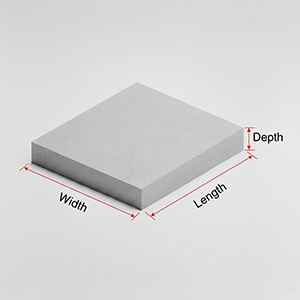
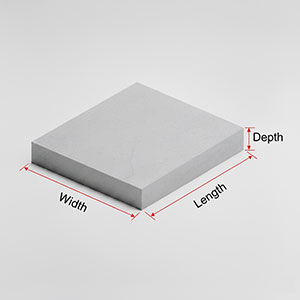
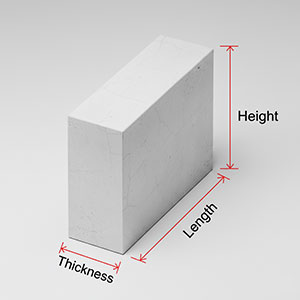
Slab: Calculates the volume for rectangular or square flat areas (length x width x thickness).
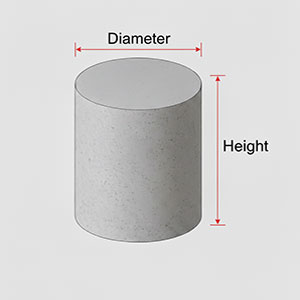
Column: Calculates the volume for cylindrical columns (requires height and diameter).
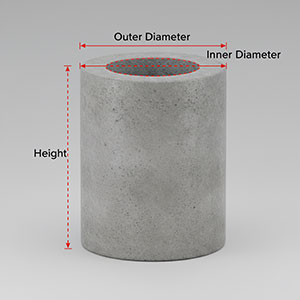
Tube: Calculates the volume for cylindrical tubes (requires height, outer diameter, and inner diameter). This is useful for sonotubes or hollow foundations.
Wall: Calculates the volume for vertical rectangular walls (length x height x thickness).
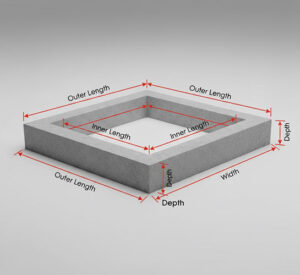
Strip: Calculates the volume for a rectangular ring or strip (e.g., a foundation footer for a building perimeter), by subtracting the volume of the inner rectangular void from the outer one (requires outer/inner length/width and depth).
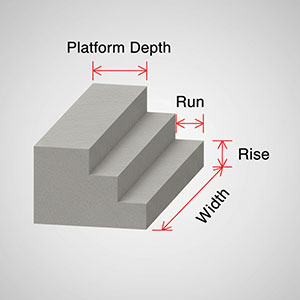
Stairs: Calculates the volume for a straight run of stairs, treating the volume as a triangular prism of steps plus an optional platform (requires width, rise, run, and number of stairs).
Unit Conversions
- Input Unit Selection: For almost every dimension input (length, width, height, etc.), you can select its specific unit: feet (ft), inches (in), yards (yd), meters (m), or centimeters (cm). This allows for mixed unit entry (e.g., a slab in feet long, but inches thick).
- Output Unit Selector: The results can be displayed in your preferred cubic unit: Cubic Feet (ft3), Cubic Yards (yd3), Cubic Inches (in3), Cubic Meters (m3), or Cubic Centimeters (cm3).
Real-time and Interactive Calculation
- Instant Results: The volume is calculated and updated automatically in the Result Display Area as soon as you change any input value or unit.
- Dynamic Error Handling: The display area instantly shows an error message in red if required dimensions are missing, zero, or if there’s a geometric conflict (e.g., inner diameter is greater than or equal to the outer diameter for a tube).
Usability Enhancements
- Clear Button: Each calculator panel has a dedicated “Clear” button to quickly wipe all numeric values for that specific shape’s inputs.
- Intuitive Interface: The layout separates input fields (left panel) from the result display (right panel) for clear usability.
Instructions: How to Use this Online Concrete Calculator
1. Select the Shape
Click on the tab that matches the shape of the concrete you need to calculate: Slab, Column, Tube, Wall, Strip, or Stairs. The corresponding input fields will appear in the left panel.
2. Enter Dimensions and Units
For the active shape, do the following for each required dimension:
- Enter the Value: Type the numeric dimension into the input box (e.g., 10).
- Select the Unit: Use the dropdown menu next to the input box to select the unit of measurement for that specific value (e.g., feet).
Note: The concrete calculator performs the volume calculation as you type, so watch the result update instantly. All dimensions except for the number of stairs must be positive values.
3. Choose the Output Unit
In the right panel at the top, select your desired Result Unit from the dropdown menu (e.g., Cubic Yards). This will dictate the units for the final calculated volume.
4. Read the Result
The final calculated concrete volume will be displayed in the Result Display Area in the right panel.
- The large number is the Volume Value (rounded to two decimal places).
- The text beneath is the Cubic Unit you selected (e.g., yd3).
5. Clear Inputs (Optional)
If you need to start over for the current shape, click the “Clear” button located at the bottom of the input grid. This will clear all numerical values for that shape and reset the result to 0.00 in the selected output unit.
Frequently Asked Questions About Concrete
How do I accurately calculate concrete volume for a slab?
To calculate concrete volume for a standard rectangular slab, multiply the length by the width to find the surface area, then multiply that figure by the thickness (depth) of the slab. Since most raw materials are sold by the cubic yard, ensure all your measurements are converted into feet first using the formula V = L x W x D, and then divide the total cubic feet by 27.
What are the main applications of reinforced concrete pipes?
The main applications of reinforced concrete pipes (RCP) center on large-scale infrastructure projects that require high structural integrity and long-term durability, such as stormwater drainage, sanitary sewers, and culverts under highways or railways. These pipes are also frequently utilized in irrigation networks and specialized industrial applications where the combination of concrete’s corrosion resistance and steel reinforcement’s strength is essential for maintaining underground utility lifespans that can exceed 100 years.
What are the benefits of using cellular lightweight concrete?
The benefits of using cellular lightweight concrete (CLC) include its exceptional thermal insulation and fire resistance, which stem from the uniform distribution of microscopic air bubbles throughout the mixture. Because it is significantly lighter than standard concrete, CLC reduces the overall dead load on a building’s foundation and structural frame, often leading to substantial savings in steel and reinforcement costs. Furthermore, its cellular structure provides excellent soundproofing qualities and makes the material easy to work with on-site, as it can be sawn, nailed, or drilled using conventional woodworking tools while remaining resistant to moisture and rot.
What are the benefits of using fiber concrete siding for homes?
The benefits of using fiber concrete siding, commonly known as fiber cement, include its exceptional durability and resistance to environmental hazards like rot, fire, and wood-boring insects. This material is composed of a resilient blend of cement, sand, and cellulose fibers, allowing it to withstand extreme weather conditions and high impact without warping or cracking. Homeowners also favor it for its low maintenance requirements and aesthetic versatility, as it can be manufactured to mimic the authentic look of cedar shingles or smooth masonry while holding paint significantly longer than organic materials.
How do I maintain and clean sealed concrete surfaces?
To maintain and clean sealed concrete surfaces, you should regularly remove abrasive dirt and debris with a soft-bristle broom or a microfiber dust mop to prevent scratches in the protective finish. For deeper cleaning, use a pH-neutral cleaner diluted in warm water, avoiding harsh acidic or alkaline chemicals that can strip the sealer over time.
How does an insulated concrete form (ICF) improve energy efficiency?
To improve energy efficiency, insulated concrete forms (ICF) create a continuous double-layered thermal barrier that eliminates thermal bridging and significantly reduces air infiltration. By sandwiching a high-density concrete core between two layers of expanded polystyrene (EPS) foam, the system leverages the thermal mass of the concrete to absorb and store heat, stabilizing indoor temperatures regardless of outdoor fluctuations. This combination of airtight construction and high R-value insulation allows ICF structures to use up to 32% less energy for cooling and 44% less for heating compared to traditional wood-framed buildings.
What is the difference between cement and concrete?
The main difference between cement and concrete is that cement is actually an ingredient used to create concrete, rather than a standalone building material. Think of it like flour and bread: cement is the binding agent—usually a fine powder made of limestone and clay—while concrete is the finished structural product formed by mixing cement with water, sand, and gravel.
What standards are set by the American Concrete Institute?
The American Concrete Institute (ACI) establishes the primary consensus-based standards, building codes, and certification requirements used to ensure the safety, quality, and durability of concrete structures worldwide. Their most influential document, ACI 318, serves as the definitive building code for structural concrete, dictating everything from minimum reinforcement ratios to earthquake-resistant design.
What is the best type of paint for concrete painting?
The best type of paint for concrete painting depends on the surface location, but epoxy-based paints or elastomeric masonry paints are generally the top choices for durability and protection. For high-traffic areas like garage floors, a two-part epoxy is superior because it chemically bonds to the surface, providing a tough, chemical-resistant finish that prevents peeling. For exterior vertical walls, elastomeric paints are ideal because they are thick enough to bridge hairline cracks and flexible enough to expand and contract with temperature changes.
What is the current average cost for concrete per yard?
The average cost for concrete per yard in 2026 typically ranges between $125 and $175, with a national average of approximately $145 per cubic yard for standard 3,000 to 4,000 PSI mixes. Some other sources report that concrete prices have a nationwide average of $179.89 per cubic yard in 2024 and a range of $160 to $195 per cubic yard.
While the base material cost is relatively stable, your final price can fluctuate significantly based on your location, the total volume ordered, and whether the supplier applies a “short-load” fee—which can add an extra $40 to $60 per yard if you are ordering less than a full 10-yard truckload.
What is the most essential concrete tool for finishing?
The most essential concrete tool for finishing is arguably the magnesium float, as it is vital for leveling the surface and smoothing out imperfections immediately after screeding. While a bull float is used for large areas and a steel trowel provides the final hard finish, the magnesium float is unique because it opens the “pores” of the concrete, allowing trapped air and bleed water to escape without sealing the surface too early. This tool is critical for preparing the slab for further decorative treatments or a broom finish, ensuring the concrete remains structurally sound and aesthetically uniform before it begins to set.
This concrete calculator estimates the volume of concrete required for several common construction shapes. Since the calculation is live, the result updates automatically as you enter dimensions.